If you're building the budget for a product launch in El Segundo, a sponsor lounge at the Los Angeles Convention Center, or an agency offsite in Century City, you need one honest number — not a "depends." So here it is: most live event printing in Los Angeles lands between $5,000 and $15,000 all-in, and we'll turn your details into a single itemized quote within 24 hours. The rest of this page explains what moves you inside that range, what the number actually buys, and how to think about it per head so it slots cleanly into your spreadsheet.
Live printing is a station — a real press, real crew, finished merch made in front of your guests — not a box of pre-printed shirts you guessed the sizes on. That changes the cost model, so it's worth understanding the parts before you commit a line item.
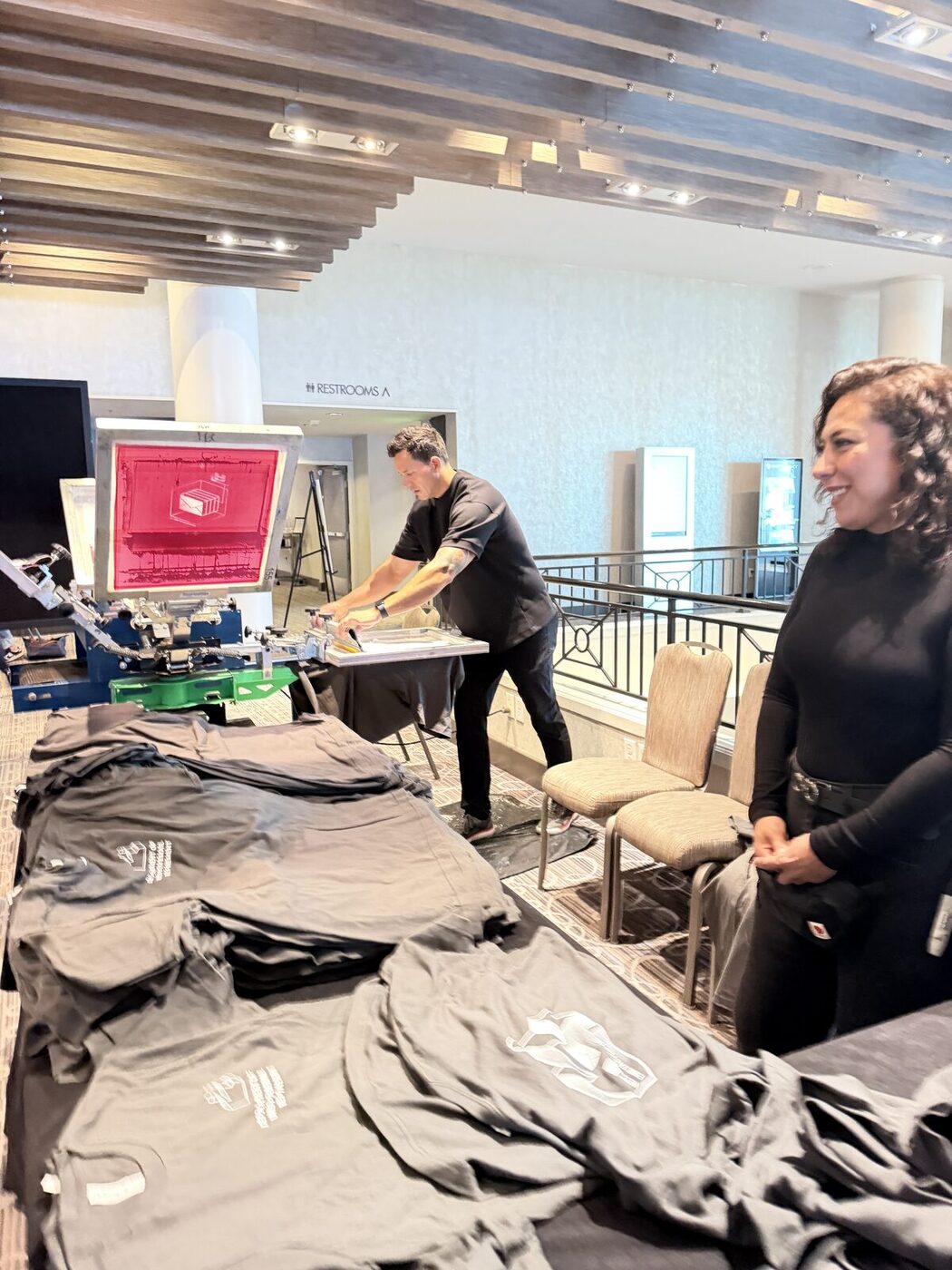
The honest range: $5K to $15K all-in
Two questions decide where you fall inside that band: how many people are you printing for, and how long do you need the station running. A 90-minute reception for a couple hundred guests sits near the bottom. An all-day exhibitor booth at a major trade show with two stations going non-stop sits near the top. Everything else lands somewhere between, and the four levers below are how it gets there.
- Guest count — how many finished pieces you're handing out. This is the single biggest driver, because it sets garments, ink, and how many printing hours you need.
- Printing hours — how long the press runs live. A two-hour activation and a six-hour booth are very different staffing commitments.
- Garment choice — a basic tee, a premium ringspun shirt, a structured cap, or a quarter-zip all carry different blank costs.
- Number of stations — one press keeps a steady line moving; two presses with two printers keep a busy LA show floor from ever having a dead moment.
What the single number actually includes
The quote you get is one all-in figure, not a stack of surprise add-ons. That number covers the crew on site, the presses and gear, the garments and blanks, setup and teardown, and every print pulled during your window. You're not separately invoiced for the trailer, the dryers, or the staff lunch — it's bundled into the figure you approve.
It helps to picture the unit being priced. A standard rig is two presses and two printers occupying roughly a 10x10 footprint per station, running on two ordinary 120V circuits. At full tilt that rig clears 100-plus shirts an hour — about two minutes per finished piece. We print on demand, so you're only making the sizes and designs guests actually want, from XS to 4XL on hand. None of that is line-item math you have to assemble yourself; the pricing page walks through how it comes together into one quote.
Thinking about it per head
Most planners find the budget easier to defend when they reframe it as cost per attendee. Take your all-in number, divide by the people walking away with custom merch, and you have a per-head figure you can compare against any other giveaway on your sponsorship deck. Stacked against branded swag that ships in a box — half of which goes home in a hotel trash can — a piece made live, sized to the guest, and posted to their feed usually wins that comparison on engagement alone.
Quick gut check: if you know your headcount and how many hours the press needs to run, you can roughly place yourself in the $5K–$15K band before you ever talk to us. Send those two numbers and we'll tighten it into a real quote.
How the method moves the cost
Screen printing gets the headlines, but it's only about 5% of the events we run — and it's rarely the whole story. The method you choose shifts both the experience and the math, so it's worth matching it to your art and your crowd rather than defaulting to "shirts."
- Full-color or detailed logos — live DTF printing handles gradients, photos, and per-guest personalization with no per-color setup and instant design swaps, which is ideal when sponsors share a booth.
- One or two bold colors at high volume — live screen printing still earns its place when the art is simple and the line is long.
- Premium executive gifts — a live embroidery station stitching caps or quarter-zips reads "client gift," not "trade-show tee," and prices accordingly.
If you're deciding between the two most common methods, our breakdown of live DTF vs. screen printing is the fastest way to land on the right one for your art and your budget.
Staffing and hours, at a high level
Live printing is staffed work, so crew and time are the backbone of the quote. The base is built around two staff and two equipment stations for your printing window, with additional crew added per hour when the volume or the timeline calls for it. The practical takeaway for budgeting: more guests or a longer run means more printing hours, and a second station to keep a busy line moving means more crew. Setup and teardown are part of the hours we account for, not a separate bill.
If throughput is what's driving your headcount math, see how many shirts we can print per hour at an event — it's the cleanest way to size your stations to your floor traffic before you lock the budget.
Travel in LA County: $0
One line you can zero out: travel is free anywhere in Los Angeles County. DTLA, Century City, El Segundo, Glendale, Long Beach, Pasadena — there's no travel fee inside the metro, so the number you're quoted is the number you pay. We keep our gear staged in SoCal, which is also why short-notice and rush events under a week are possible when the calendar cooperates. Two to four weeks of lead time is comfortable; a major Convention Center week books crews up fast, so plan ahead when you can.
Getting a real number in 24 hours
You don't need to nail every detail to start. Send three things — your venue or area, your date, and your expected headcount — and we'll itemize the crew, presses, garments, setup, and every print into one clear quote, back to you within 24 hours. If you already know which method or how many stations you want, even better; if not, we'll recommend the setup that fits your room and your budget. Brands like Dickies have run live printing at their events, and the path from "what does this cost" to a real number is the same for a 50-person reception as it is for a Convention Center floor.