Walk the South Hall at the Los Angeles Convention Center during a big run and you'll see the same thing at booth after booth: a fishbowl of branded pens, a stack of one-pagers, and a rep hoping someone slows down. A live-printing station does the opposite — it makes the booth the place people on the floor walk over to find. Attendees stop, watch a shirt get pulled and pressed in about two minutes, and leave wearing your logo across a convention center full of your competitors. This is a practical guide to running that station on an LA show floor: the power, the load-in, the house and union rules, and the throughput math that keeps a line moving for the full show day.
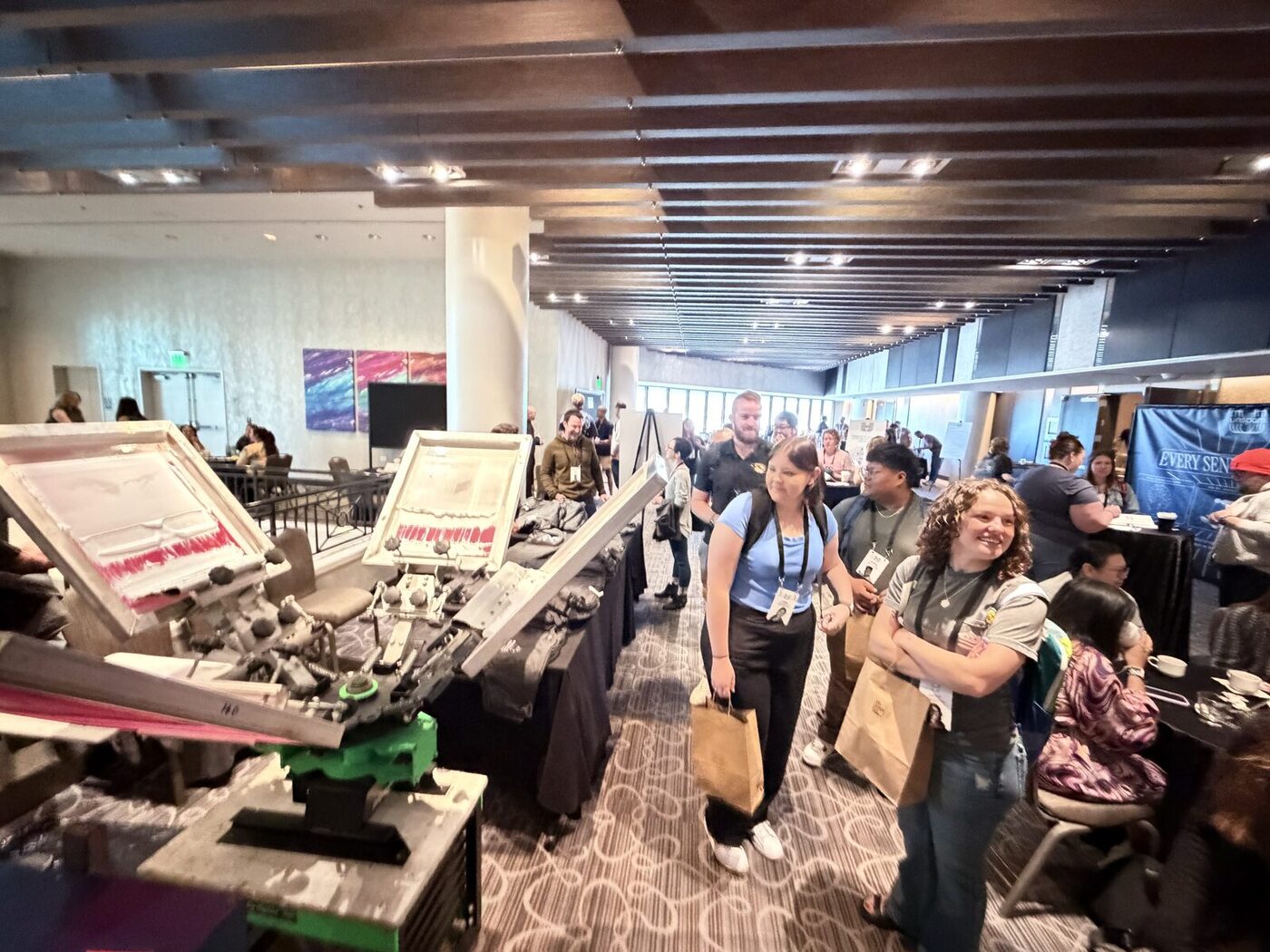
We've run live stations at exhibitor booths across the LA metro, and the pattern holds at every scale: a press running in your booth is an activity, a photo moment, and a branded keepsake in one. Here's how to plan it like an exhibitor, not an afterthought.
Footprint: a live station fits inside a standard 10x10 booth
A live-printing station needs about a 10x10-foot footprint — which means it fits inside a single standard trade-show booth with room to work. A standard rig is two presses plus two printers, but a tighter booth can run a single station and still pull a steady line. Plan the layout around flow, not just square footage: you want a clear intake side where attendees hand off art or pick a size, a working press the line can see, and a finished-goods table where folded shirts come off. The act of watching the print happen is the marketing, so don't bury the press behind a counter — put it where the aisle can see hands moving.
If you're choosing between methods for a booth, full-color live DTF printing swaps designs instantly with no per-color setup, which is ideal when sponsors share a booth or art changes by the hour. Live screen printing still earns its spot when the art is one or two bold colors at high volume — but screen printing is only one tool on the truck, not the whole show.
Power: budget two 120V circuits per station
This is the line item most exhibitors forget until load-in day. Each station needs two standard 120V circuits — they feed the flash dryers that cure prints between passes. The Convention Center and most major LA expo halls sell electrical through the official house contractor, and it is ordered in advance, by the booth, on a deadline. Order it early and order it to the right spec: tell the show's electrical desk you need two dedicated 120V/20A circuits at the booth, placed where the station will sit. Floor power that shows up in the wrong corner of a 10x10 means a tangle of cords across an aisle, which house safety will flag fast. Send us your booth number and we'll spec the exact power order so it's right before you submit the form.
Drayage, load-in, and the house contractor
Big LA shows run material handling — drayage — through the general service contractor. Your gear gets received at the advance warehouse or the dock, moved to your booth, and the empties get stored and returned. For a live station that's good news: our crew rolls in with cased presses and supplies, checks in at the marshaling yard or dock per the exhibitor kit, and sets up inside your booth during move-in hours. The things that bite exhibitors are timing and paperwork, not the printing — target freight deadlines, dock appointment windows, and the certificate of insurance the venue wants on file. We've done the load-in dance at the LA Convention Center before; give us the exhibitor service manual and we'll work to its calendar.
Booth math for show hours: each manual press prints up to 60 shirts an hour, and a standard two-press, two-printer rig clears 100+ shirts an hour at full tilt — roughly two minutes per finished shirt. Want to size a single station to your aisle traffic instead? See how many shirts we print per hour.
House and union rules: plan around them, not against them
Convention venues have house rules, and several LA halls are union floors. In practice that shapes a few things: who can move freight past a certain weight, who handles the electrical hookup, and what hours your crew can be on the floor during move-in and move-out. None of it stops a live station — it just means we plan to it. We bring a self-contained printing operation that sets up within your booth, we order labor and power through the official channels when the venue requires it, and we keep cords, water, and ink handling tidy enough to pass a floor-safety walk. The exhibitor service manual spells out the specifics for each show; send it our way and we'll flag anything that affects setup before you're standing on the dock.
Lead and badge capture: print at the moment they scan
The reason a live station out-pulls a bowl of pens isn't just the crowd — it's the trade. A pen costs you nothing and tells you nothing. A custom shirt, sized and printed on demand, is worth a badge scan. Tie the station to your lead flow: scan the badge or capture the contact at intake, then hand off the size and start the print. Attendees happily wait two minutes for something made for them, and that wait is exactly when your rep has their attention for a real conversation. You walk away with qualified leads instead of a depleted swag bin, and they walk the floor advertising your brand on their back for the rest of the day. Brands like Dickies have run live printing at their events for exactly this reason — the merch does the work after the booth conversation ends.
Placement: steal the aisle traffic
Where the station sits inside the booth decides how much of the aisle you catch. Push the press toward the open corner or aisle line so passersby see hands working a squeegee or a heat press from down the row — motion is what breaks stride. Keep the finished-goods table visible too; a stack of fresh, folded tees is a billboard for "free shirt, made here." Leave a clear lane for the line to form along your booth rather than spilling into the aisle, which house safety will police. A station placed to be seen turns a 10x10 into the busiest corner on the floor; a station hidden behind a counter just prints for the people already standing in it.
Timing: LA show weeks book crews fast
LA's convention calendar bunches, and Convention Center weeks in particular sell out crews early because every exhibitor on the floor is chasing the same vendors. Two to four weeks of lead time is comfortable for a standard booth; for a multi-station setup during a major show week, give us more runway. We keep gear staged in SoCal, so short-notice requests aren't hopeless — but the floor rewards planning ahead. Most LA events land between $5K and $15K all-in, and one number covers the crew, presses, garments, setup and teardown, and every print. We serve all of Los Angeles County with no travel fee.
Hosting at the Convention Center or anywhere in the core? Our trade show live printing page breaks down booth setup and staffing, and our Downtown LA (DTLA) area page covers the venues and districts around the show floor. Curious why so many local exhibitors make the switch? Read why LA companies book live printing. When you're ready, send your booth number, show dates, and badge estimate, and we'll itemize a full quote within 24 hours — see how pricing works.